Project Ava is one of several experimental concepts Razer presented at CES 2026, drawing attention for its unconventional approach to human–AI interaction. Reimagined from earlier iterations, Project Ava is now positioned as a holographic AI assistant displayed within a compact 5.5-inch desktop capsule. The concept aims to explore how animated avatars and real-time interaction could redefine how users engage with artificial intelligence, particularly in gaming-focused environments.
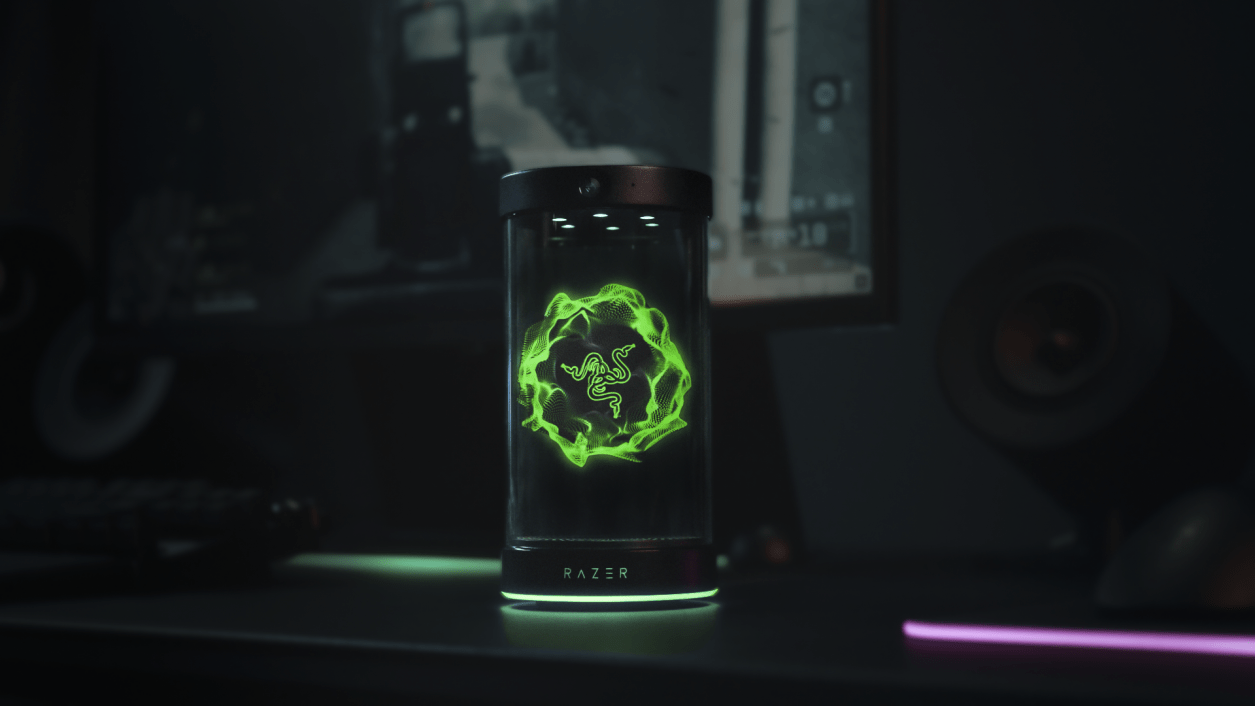
The system integrates three-dimensional character rendering, voice interaction, and computer vision. As of right now, Project Ava has two primary avatars: Zane, a digitally rendered warrior character with tattoos and a more rugged appearance, and Kira, an anime-styled character with a green outfit and unique visual design. More avatars, such as depictions of well-known people like professional esports player Faker and more abstract visual shapes like a pulsing orb of light, are anticipated for upcoming updates, Razer said.
Each avatar has built-in cameras and sensors that use machine vision and generative AI to assess the user and the environment. Demonstrations revealed that Project Ava could identify on-screen elements, identify active games, recommend in-game tactics, and comment on digital storefront promotions. In addition to gaming, Razer proposes that the assistant could offer guidance on personal organization, productivity, and even wardrobe selection.

The device has two microphones and a command button that can be customized to facilitate user interaction. Currently, Project Ava uses the Grok language model. Razer has clarified that the platform is intended to be AI-agnostic, enabling users to select their preferred AI engine. This includes planned compatibility for other models like ChatGPT and Gemini.

Reactions were mixed during live demonstrations at CES. Although the assistant responded quickly and contextually, at times, especially in scenarios that focused on gameplay, her scripted enthusiasm and highly expressive personality felt invasive.
However, Razer argues that Project Ava gives AI a more persistent and visual presence, which is a step forward in human–machine interaction. Although it is still a concept, Razer has begun accepting $20 early reservations, with a release date of the end of 2026.
This product will also be featured in Ubergizmo’s Best of CES Awards.
Filed in . Read more about AI (Artificial Intelligence), CES, CES 2026 and Razer.