Google is currently testing a revised onboarding strategy for Chrome on Windows, aimed at increasing the browser’s visibility and accessibility. The update, discovered in the Canary experimental channel, as reported by Windows Report, introduces a more prominent prompt during the initial setup process that encourages users to not only set Chrome as their default browser but also to pin the application to the Windows Taskbar.

In previous iterations, the onboarding screen focused primarily on a single toggle to designate Chrome as the primary browser. The new interface features a more explicit layout, including a dedicated button to pin the app directly to the taskbar.
This move is widely seen as a tactical response to Microsoft Edge, which is deeply integrated into the Windows ecosystem and frequently promoted through system-level notifications. By securing a permanent spot on the taskbar, Google aims to ensure Chrome remains the most convenient option for users, even on devices where Edge is the pre-installed default.
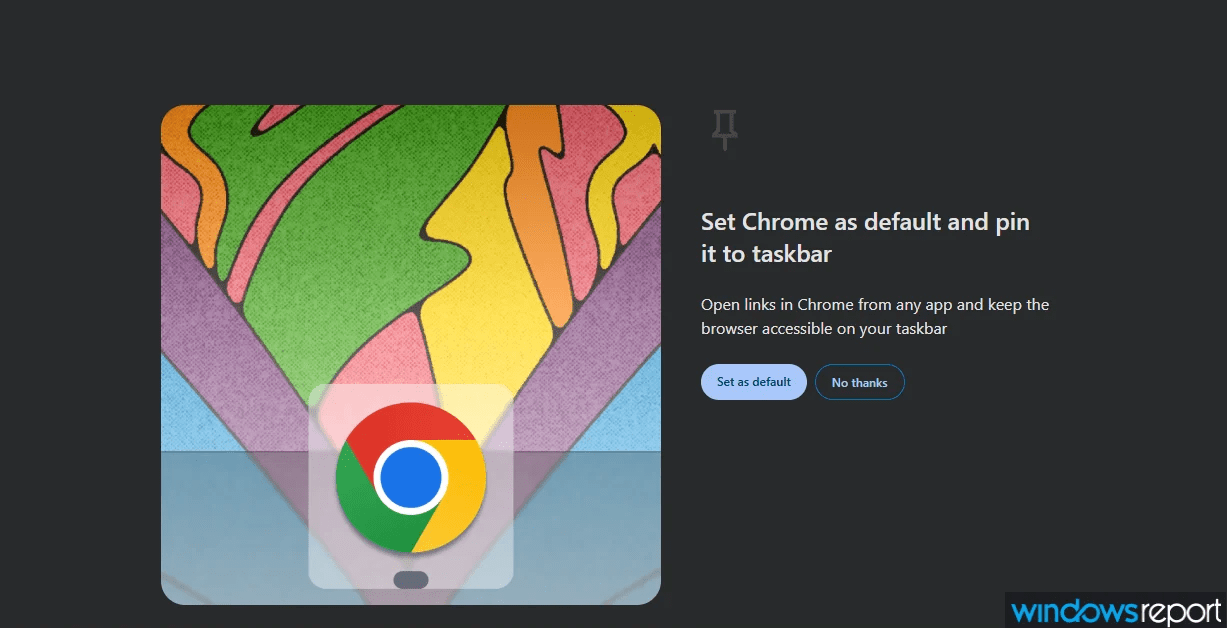
The feature is currently in a limited testing phase. While it is not yet part of the stable public release, early adopters and developers can manually trigger the new onboarding experience by navigating to chrome://flags/ and enabling the #first-run-desktop flag.
Google is expected to monitor the effectiveness of this more assertive approach before deciding on a wider rollout. If the “pin-to-taskbar” prompt successfully increases user retention, it will likely become a standard part of the Chrome installation process on Windows in the coming months.
Filed in . Read more about Chrome, Google, Microsoft Windows and Windows 11.