Mercedes-Benz has announced a strategic shift in its interior design philosophy, confirming plans to reintroduce physical buttons and tactile controls across its future automotive lineup.
The decision, officially verified by CEO Ola Källenius, comes as a direct response to widespread driver dissatisfaction regarding overly complex touchscreen interfaces and unintuitive digital menu systems.
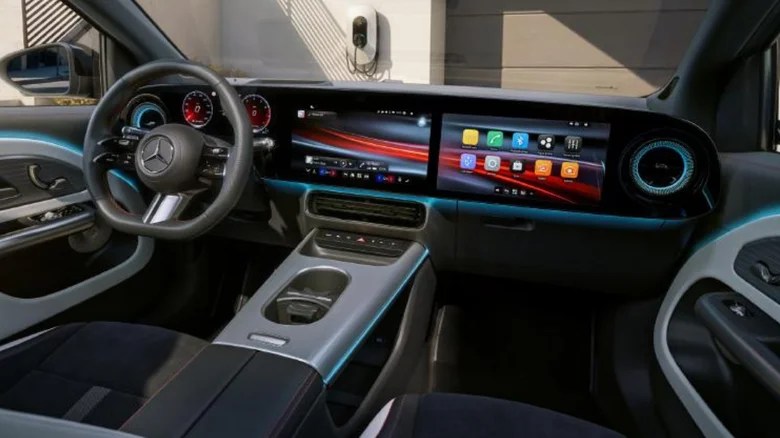
Mercedez-Benz to bring back the good old physical buttons because drivers think touchscreens are overly complicated. (Image: Mercedez-Benz)
The German luxury automaker aims to step back from the prevailing industry trend of migrating nearly every cabin function onto centralized digital displays. Drivers have voiced significant frustration over the complete elimination of tactile controls, noting that touch-only interactions complicate simple adjustments while navigating. Furthermore, studies conducted by organizations such as J.D. Power and the AAA Foundation for Traffic Safety demonstrate that full touchscreen reliance considerably increases driver distraction by pulling visual focus away from the road for extended periods.
Mercedes-Benz executives have publicly acknowledged that the brand went too far in stripping essential mechanical switches and tactile inputs from vehicle dashboards. The upcoming design transition is not intended to eliminate modern displays entirely, but rather to establish a functional hybrid layout that balances advanced digital instrumentation with direct, dedicated hardware buttons for critical operational features.
This strategic reassessment marks an evolution away from hyper-minimalist cabin concepts, such as the extensive MBUX Superscreen seen in models like the electric GLA SUV, where digital glass previously spanned the entire cockpit dashboard.
The move by Mercedes-Benz reflects a broader pattern taking shape across the global automotive industry. Major competing manufacturers, including Volkswagen and Hyundai, are similarly reversing course on capacitive touch surfaces by restoring physical controls, buttons, and traditional dials to their steering wheels and center consoles to enhance vehicle ergonomics, tactile responsiveness, and overall road safety.
Filed in . Read more about Electric Cars.