You know that feeling when you come across an image or video online and immediately wonder, “Is this real, or is this AI?” That uncertainty is about to change.
Following the rollout of its Nano Banana 2.1 model for image generation, Google officially launched the dedicated public website for SynthID. Available starting this week, the service allows any user to freely check whether images, videos, or audio files contain synthetically generated elements using Google’s proprietary watermarking technology.
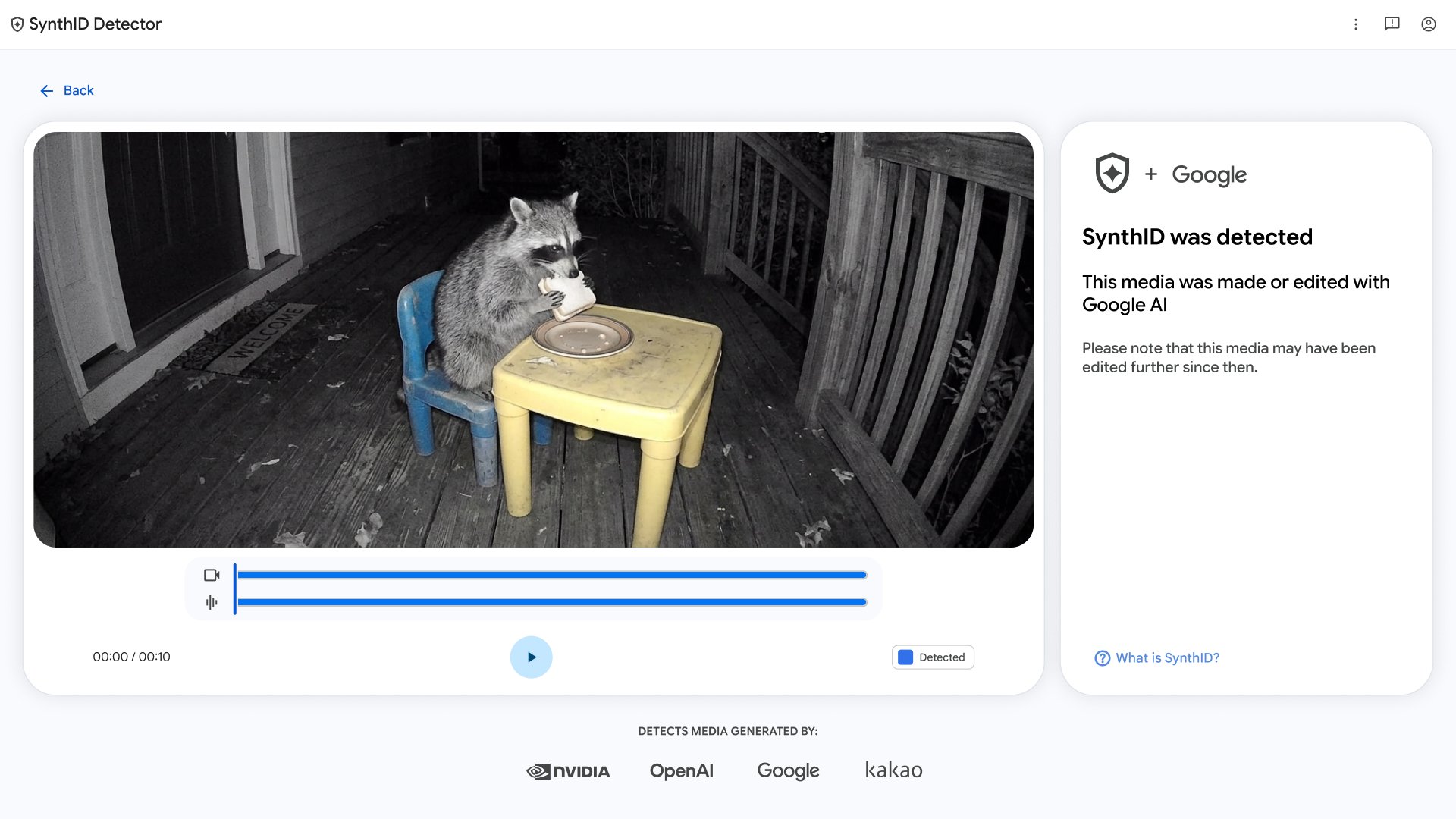
Originally limited to selected researchers and journalists following its preview at Google I/O, the tool is now open to the general public. The verification ecosystem already processes roughly 1 million requests daily, bolstered by direct native integrations across Google Chrome, Search, and the Gemini app. Since the framework debuted in 2023, Google has embedded imperceptible digital watermarks into over 180 billion visual assets and 240,000 years of audio material.
https://twitter.com/Google/status/2107836407616299371
Operationally, SynthID analyzes files to discover invisible digital signatures applied by generative models such as Nano Banana, Veo, and Lyria, alongside media created with Gemini, Flow, ProducerAI, and Google Vids. The detector accommodates standard web formats, including JPG, PNG, and WEBP for stills; MP4, MOV, and WEBM for video; and WAV, MP3, and AAC for audio.
Efforts to standardize synthetic media detection have attracted notable industry partners. Key tech leaders including OpenAI, NVIDIA, and Kakao have embraced SynthID compatibility, and Apple is slated to adopt the system in an upcoming update.
The system is not entirely infallible, however, as the digital ecosystem still lacks a single universal standard. Competing firms like Microsoft and Meta maintain independent watermarking protocols, creating fragmentation across platforms. Even so, broader adoption by companies like Apple may drive greater industry alignment going forward.
The SynthID Detector platform is accessible online for direct public use.
Filed in . Read more about AI (Artificial Intelligence) and Google.