Anker is entering the hearing-aid market with the Anker RIC Hearing Aids, its first over-the-counter receiver-in-canal hearing aid for adults with perceived mild to moderate hearing loss. The product is expected to launch in the United States in Q1 2027.
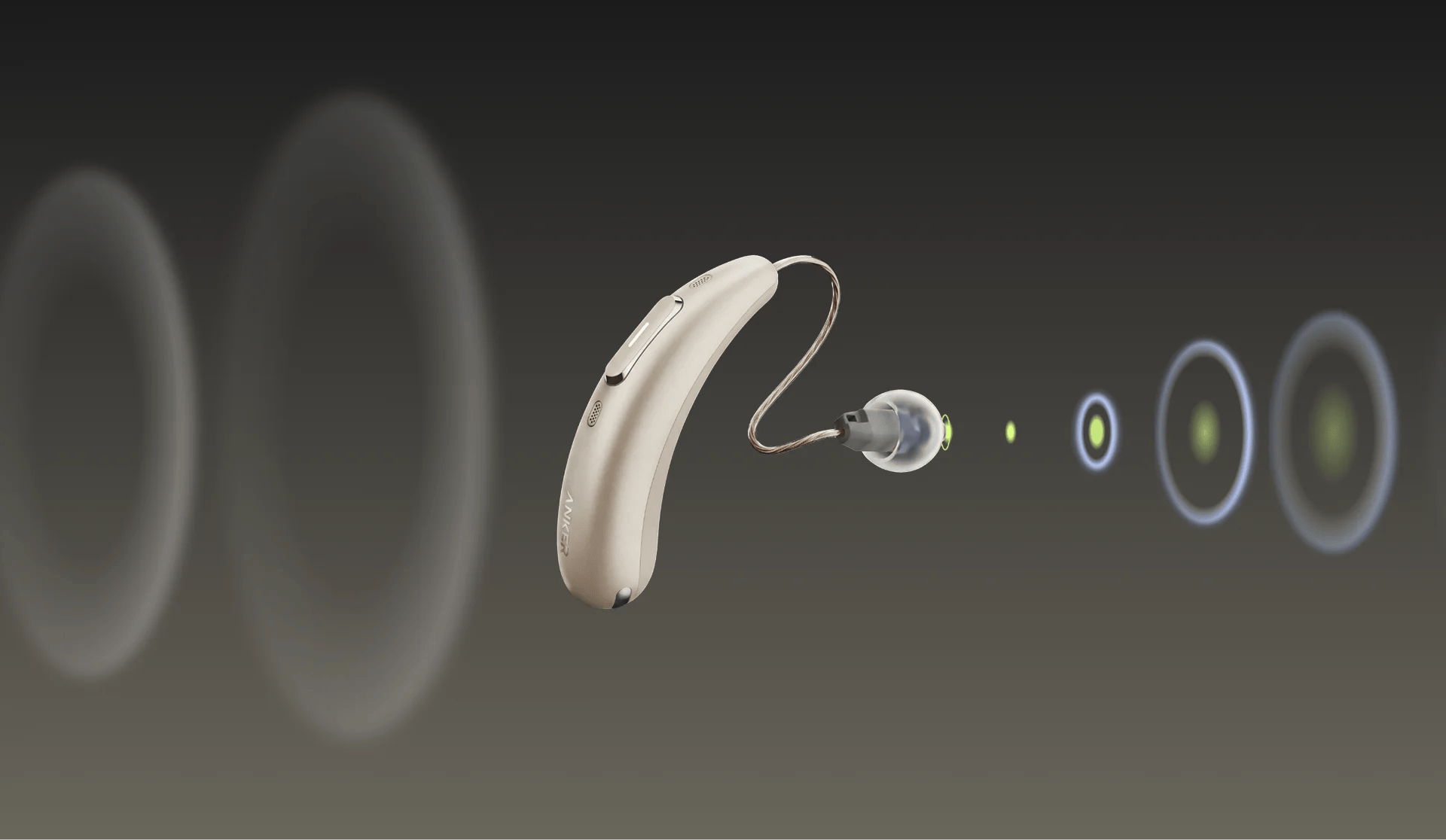
At the core is Anker’s Thus AI chip, developed to address one of the most important challenges for people with hearing loss: understanding speech in noisy environments.
Restaurants, parties, family gatherings, and meeting rooms are among the most difficult situations for hearing-aid users. Traditional amplification can make sounds louder, but it does not necessarily make conversations easier to understand when several people are talking at the same time and background noise competes with the voice the user wants to hear.
This problem can have a significant impact beyond hearing itself. When following a conversation becomes difficult, people with hearing loss can participate less, miss parts of discussions, or withdraw from social interactions altogether.
The Anker RIC Hearing Aids are designed specifically to improve that experience.
Using AI-based audio processing, the device separates speech from surrounding noise in real time. Anker says the system can deliver up to 90% speech intelligibility in challenging environments including restaurants, parties, and meeting rooms.
This focus on speech clarity in noisy environments gives the product broader potential impact than simply increasing amplification. Better separation between voices and background noise can help users stay engaged in conversations in the environments where hearing difficulties are often the most disruptive.
The hearing aids use a receiver-in-canal, or RIC, architecture, with the main electronics positioned behind the ear and a small receiver placed inside the ear canal. Each unit weighs 6.61 grams and carries an IP68 rating for resistance to dust, sweat, and water.
Comfort was also a design priority. Anker modeled the hearing aid’s curvature using a human-ear database to distribute pressure more evenly. The teardrop-shaped body is designed to leave room for eyeglasses, while a UV-cured low-friction coating helps reduce friction during extended wear.
As an OTC hearing aid, the device is intended to make hearing assistance more accessible. Users can complete a hearing test through the Anker app and receive personalized settings and setup guidance without requiring an initial clinic visit or professional fitting.
Anker also redesigned the charging case around accessibility and ease of use. A built-in display shows the battery level and currently selected listening program. Physical buttons on the case allow users to change modes without using a smartphone.
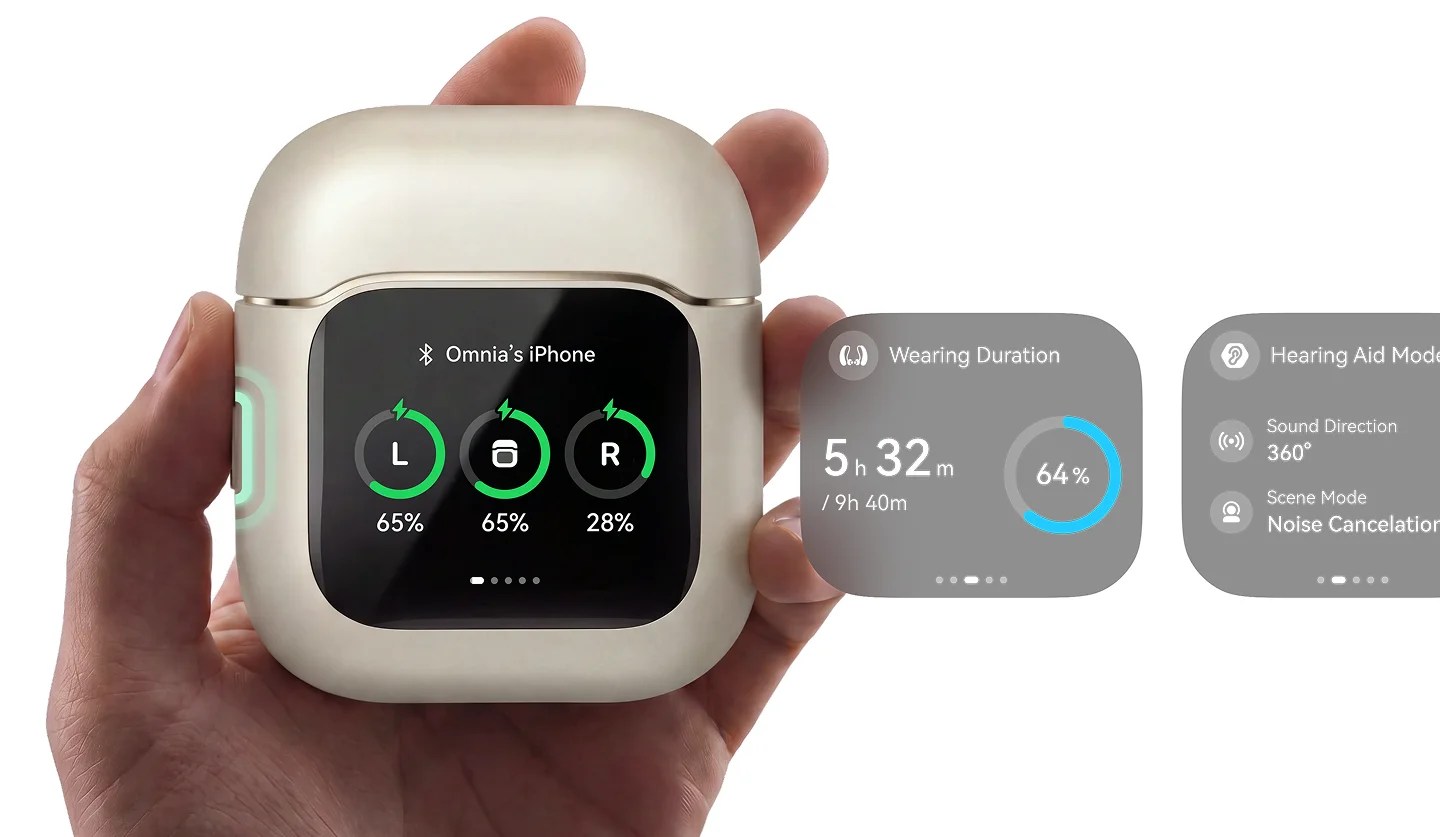
The hearing aids support Bluetooth 5.4 with dual-device connectivity. A five-minute fast charge provides approximately two hours of use, according to Anker.
The combination of AI speech processing, OTC accessibility, and a traditional RIC hearing-aid design makes the Anker RIC Hearing Aids a particularly meaningful application of consumer AI technology. Instead of adding AI as an additional feature, Anker is applying it to a core hearing-aid problem: helping people distinguish the conversation they want to hear from the noise around them.
For people with hearing loss, improving that capability can directly affect their ability to participate in dinners, meetings, celebrations, and everyday conversations. It turns better speech processing into something more important: better access to social interaction.
Beta testing registration for the Anker RIC Hearing Aids opens in September 2026, with the commercial U.S. launch planned for Q1 2027. Pricing has not yet been announced.
Filed in . Read more about AI (Artificial Intelligence), Anker, Audio, Editorpick and Hearing Aid.